View all
Staying out of professional trouble: things nurses should watch out for
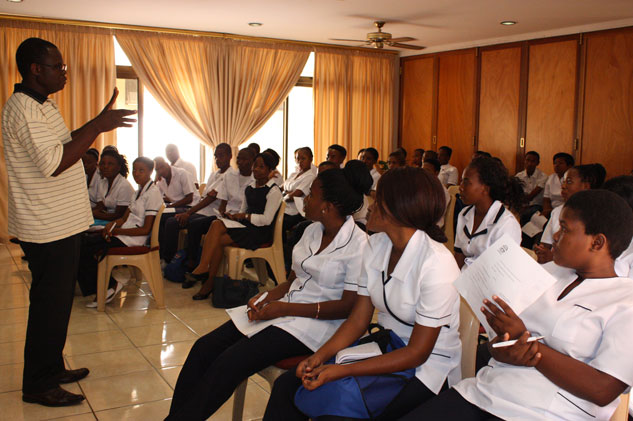
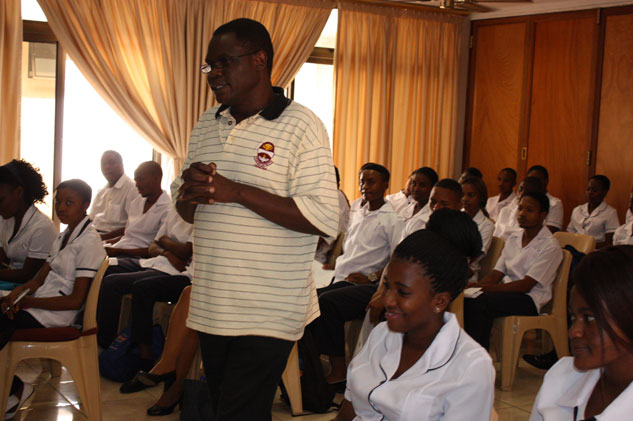
Thomas Chauke talking to student nurses from Sefako Makgatho University (formerly MEDUNSA)
By Thomas Chauke
For 30 years that I have been a bedside nurse, moving over to the other side to organize and represent nurses in their workplace is an experience that is worth sharing with other fellow nurses, especially professional-related cases that nurses have to answer at South African Nursing Council (SANC).
In most cases, the five body parts of a nurse are the main cause of this, which often informs how society views nursing and nurses. Based on my experience of the cases that we had to represent our members on at the Council and general observation when visiting nurses at facilities, I felt it necessary to share with nurses especially the younger ones and those who are still studying to watch out for the following and know how best to use each of them at the right time:
Mouth:
This is the most effective communication component that links the patient with the health professional. How it is used is of utmost importance. As a nurse, it is not acceptable to ask a man on a queue reserved for pregnant women if he is also pregnant, without asking why he is there. Some patients are not fortunate to be educated and they can’t read signs at the facility. This is what I experienced myself, when I went to see a nurse at the facility from a sister that I happen to visit on a union matter. Another one bad example is answering a patient when asking for pen by asking ‘why are you asking ME for that, papa?”
Explaining to the patient in a nice way is so simple than choosing the hard way, which often lends you in a disciplinary or, worse still, a professional conduct case.
Legs:
They way your legs carry your body to work in the morning can say and convey a strong message about yourself as a nurse and how you are likely to conduct yourself while on duty. Arriving at work walking slowly as if you are tired and never rested can spell the kind of day you’re going to have at the office. This slowness can also put you in trouble if an urgent case is not responded to in your presence.
Hands:
Hands can be best used for patient care. One of the bizarre cases that as a trade union we have to represent one of our members on at the Council was that of a patient who was assaulted for using staff toilet instead of a public toilet soon after a procedure was performed on the client. The patient was injured. It’s one lesson to learn, and it’s an act that we cannot condone as the organisation.
Eyes:
The eye contact with a client is the most import component that either sours or warms up the working relationship. Patients have complained and lodged complaints with the Council on the way nurses look at them. It may appear a mundane task, but looking at the patient in a pure and no grudging manner can go a long way in fostering a positive relationship between a client and a nurse.
Ears: On many occasions nurses have had to answer for cases that it wouldn’t have been necessary for them to. Certainly, when a patient suffers from excruciating pain and crying out loud at a facility, while the nurse plays music so loudly with the earphones while at work is a difficult case to defend at the Council, especially when a patient has passed on because a nurse was playing music and could not hear the patient shouting for help. Ears in this case could be used effectively in the process of assisting and caring for patients who are in desperate need of care and who rely on nurses’ full attention for their recuperation at hospitals or clinics.
Thomas Chauke is DENOSA Provincial Organiser in Gauteng, based at the head office
End
https://couponpolicies.com/site-coupon/chattimes.me
https://worldsciencejobs.com/science-job/chattimes.me/
https://bestfreediscount.com/site-coupons/chattimes.me