View all
SA health workers return from Sierra Leone
EBOLA UPDATE
They achieved 32% survival rate
By Sibongiseni Delihlazo
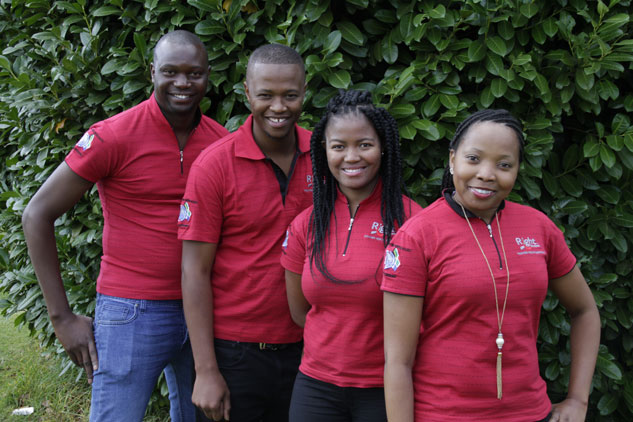
L-R Ishmael Mbulawa, Billy Nyaku, Neo Mokone and Lucy Thukwane nurses who worked in Ebola ICU in Sierra Leone and have returned back healthy to South Africa.
On 22 March, Right to Care welcomed South Africa’s first team returning from Sierra Leone – the first African country to arrive in the country to assist. Over eight weeks they generally worked seven days a week working shifts at various times through a 24 hour period. They treated and cared for 98 Ebola patients in Freetown, of which 32% survived. It was inspirational to hear and absorb the commitment and enthusiasm which they brought back from their work in Sierra Leone.
“They have grown immensely as people and health care workers through this experience and this passion will rub off on other health care workers in South Africa. They went through 21 days quarantine at home where they were monitored daily. We congratulate them as representatives of Right to Care and of South Africa,” says Kurt Firnhaber, chief operating officer, Right to Care, a non-profit organisation that supports and delivers prevention, care, and treatment services for HIV, TB, and Ebola.
“It was inspiring to hear that each one of them received a call at their homes from the Minister of Health, thanking them for their service and commitment,” he continued.
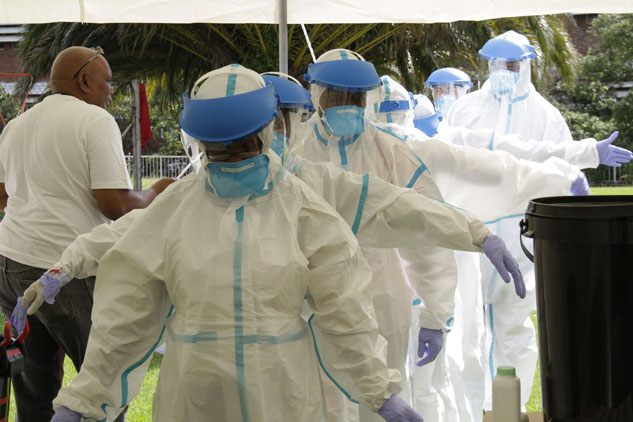
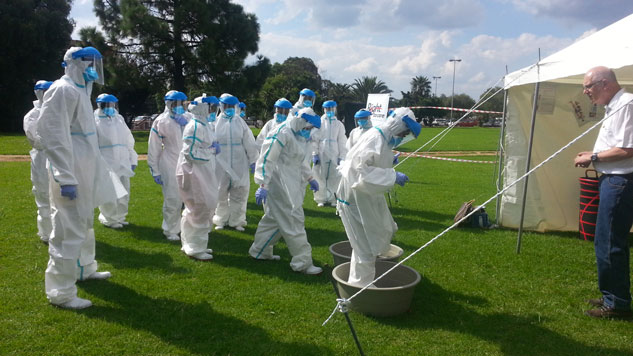
South African healthcare workers who assisted in treating Ebola in Sierra Leona
One of the nurses from KZN, Laura-Romaine Mosiah, says the trip was fulfilling. “I feel like I want to go back, because the country there is so poor and they need so much help, and we can provide that help. In fact I’ve wanted to go there since May last year when the outbreak was still fresh,” she told Nursing Update. She says the illness has changed in this outbreak, with bleeding mainly internally as opposed to being externally.
“The bad part about the disease is that you treat it symptomatically,” says Laura whose parents thought she was joking when she expressed a wish to join the humanitarian team. But I explained to them the situation. For me, nursing has always been a calling and my parents have long accepted it. She thinks being a spiritual family has assisted in accepting her adventure, as her father is a pastor.
Laura graduated in 2006 and says, because of her passion for nursing, she rather works art-time locally just to be able to pay the bills and sees herself joining another humanitarian organisation soon to assist wherever there’s an outbreak as devastating as Ebola.
Another professional nurse from Gauteng, Neo Mokone, also wishes to go back to the country she fell in love with. “We wish the survival rate could have been more than 32%, but we are proud. Sierra Leone is not well-off economically, and institutions have closed following the war that hit that country, and unemployment is quite high.” She says cultural beliefs have exacerbated the outbreak, especially as some community beliefs are to touch and wash the corpse and use the same water to wash the whole family members. “We look forward to going back there where there is a great need to assist the survivors of Ebola with the after effects of the virus, such as partial blindness, limping etc, especially as the country’s health and education closed down during the Ebola. Hopefully South African government will assist the country gets off its feet in two aspects,” concludes Neo.
“The incidence rates in Sierra Leone are declining fairly consistently now. From the 27th of May there have been no new cases, although it is early days, it does appear to mark the end of this outbreak,” says Kurt.
While they have worked extremely well in achieving 32% survival rate, they nurses share a sad story of the devastating effects of Ebola. They all think of a 17-year boy, Emmanuel, who was so courageous and survived the virus after staying at the facility for 60 full days. But because he had been in bed for so long, he developed bed sores and had to be operated on, but unfortunately anaesthesia was too strong, and he died.
As Liberia is declared Ebola-free by the World Health Organisation (WHO) and othe countries are on the brink of being declared Ebola the same, DENOSA salutes the great contribution made by the nurses, and hopes three of them will get employed (they are job-hunting currently). The names of the first group of health care workers are:
- Laura-Romaine Mosiah
- Adelaide Neo Mokone
- Ishmael Mbulawa
- Billy Tlou Nyaku
- Lucy Elizabeth Thukwane
- Muzi Goodenough Kubeka
- Biljana Solanki
Right to Care recruited and trained the first round of healthcare professionals to work in Sierra Leone as part of the SA initiative with the Department of Health and the Wits Health Consortium for the Ebola Emergency Response.
The first group was stationed at the Goderich Emergency Ebola Treatment Centre on the outskirts of Freetown, Sierra Leone.
Right to Care contributed R3 million to the initiative and FirstRand (FNB) paid for transport, international flights and transfers for this medical intervention. The private sector has also contributed to this initiative.
Countries with Widespread Transmission (at 8 April 2015)
|
Country |
Total Cases (Suspected, Probable, and Confirmed) |
Laboratory-Confirmed Cases |
Total Deaths |
|
Guinea |
3515 |
3089 |
2333 |
|
Liberia |
9862 |
3151 |
4408 |
|
Sierra Leone |
12138 |
8554 |
3831 |
|
Total |
25515 |
14794 |
10572 |
End