View all
Coming face-to-face with Ebola patients in West Africa
Proud nurse says treating Ebola patients is the most challenging task for many reasons
By Sibongiseni Delihlazo
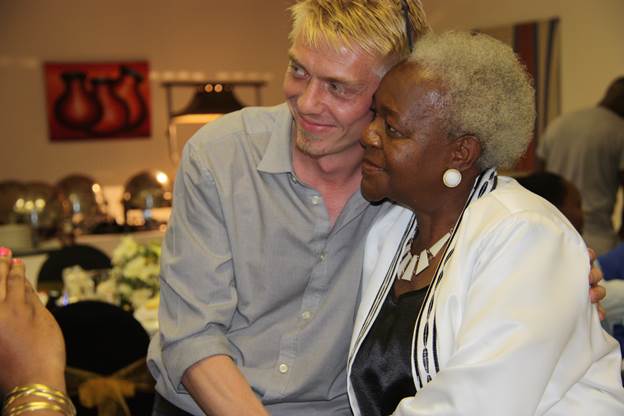
Jens Pedersen is a passionate nurse. Working for Doctors without Borders, he has just returned from the Ebola battle field in Liberia and Sierra Leone where he treated hundreds of patients suffering from the greatest outbreak of Ebola in the history of the virus since it emerged in the 1970s.
While the virus has claimed lives of more than 5100 civilians, health workers themselves have not been sparred as more than 380 of them have perished since the virus made its inroads in December last year.
Although it is more than 21 days since he returned from the town of Monrovia, where it had become a norm for a person to be seen lying on the ground on the street of the town with glaring signs of the virus, Jens has had to experience some regrettable signs of rejection or people distancing themselves from him by being reluctant to shake his hand.
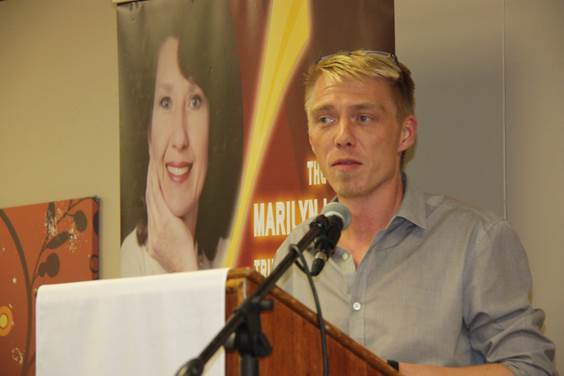
He was a guest speaker at the DENOSA event on the 20th of November in Pretoria where DENOSA held its annual Marilyn Lahana Trust Caring Awards, acknowledging outstanding nurses.
Health workers who are treating Ebola patients have increasingly been experiencing rejection from their own family members who have become more concerned about their exposure to what has become the deadliest fever.
“Having witnessed that myself, I thought as a nurse there’s no better way to express the challenge of treating Ebola patients than to express great respect for sister Lahana.” He is referring to the South Africa’s first person, and a professional nurse, to be infected with Ebola in 1996 at a Johannesburg Hospital after consciously caring for a Gabonese doctor who had been admitted to the hospital suffering from the virus. She died a few days later. The Marilyn Lahana Awards are in her memory and applauds nurses who have put the interests of their patients ahead of their own, just as Marilyn did.
“Treating Ebola patients is the most difficult task. Not because there’s no cure, but because the challenge of how to relate to a patient while you as a health worker are in that protective clothing,” he added.
Pedersen adds that while health workers experience ill-treatment from families to communities at large, this is only a drop in the ocean compared to what Ebola patients experience daily in their communities. “I’ve only experienced a fraction of what Ebola patients go through every day. People are still afraid of touching me, even way after 21 days of my return from Liberia and Sierra Leone.”
His message to fellow nurses in South Africa is very clear. “I’d like to urge that when we speak about Ebola, we can’t afford to panic as health workers, as we try to demystify the virus,” he said.
At the same event, DENOSA President, Simon Hlungwani, said it is opportune time that nursing organisation like DENOSA, together with the office of the Chief Nursing Officer, embarked on a nationwide educational programme next year, conscientising communities about this killer virus.
End