View all
Nurse leaders graduate in Pretoria
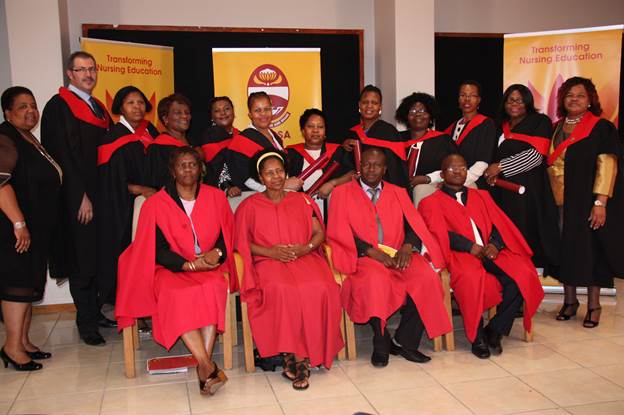
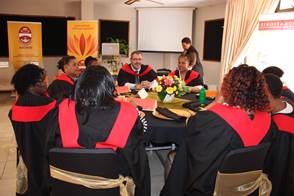
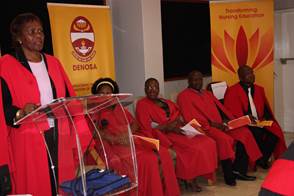
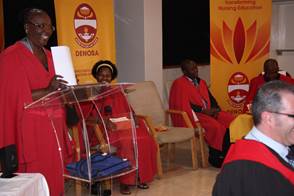
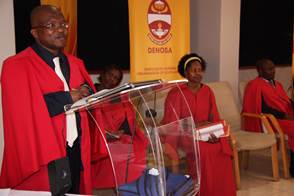
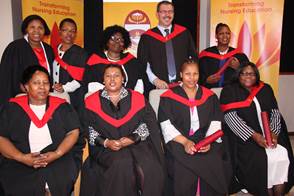
WITH the country on its gradual phases in implementing National Health Insurance (NHI), Twelve leaders graduated on Leadership For Change (LFC) programme at DENOSA head office in Pretoria this afternoon, where as part of their year-long programme they looked at the sustainability of NHI throughout the country. They are the third group to graduate under the programme.
The LFC programme is the educational product of International Council of Nurses (ICN) that is offered by DENOSA Professional Institute (DPI), a professional wing of the Democratic Nursing Organisation of South Africa (DENOSA), which capacitates nurse leaders with leadership skills to management and resolve tough work-based challenges.
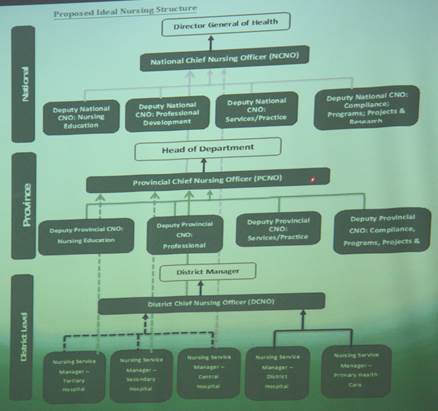
The group comprises of nurse managers, hospital CEOs and Directors at provincial departments, head of DPI, former DENOSA President and Provincial Secretary of DENOSA in the Eastern Cape. They combined their efforts in working on a project under the topic: “Appraisal of the South African Nursing Structures for a Successful Implementation of the National Health Insurance (NHI)."
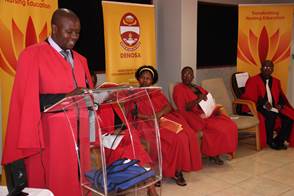
The group, which is represented by nurse leaders from Eastern Cape, KwaZulu-Natal, Gauteng, North West, and Northern Cape, enrolled for the programme out of their own funding. “It entailed paying physical visits to NHI pilot sites, teleconferencing, accommodation and travelling costs, which cost us over R90 000 altogether, but we are happy with the outcomes of the work,” she the group leader and former DENOSA President, Dorothy Matebeni, who presented the group’s findings. The findings pointed to a number of areas that needed to be done for a successful implementation of the NHI.
Some of the findings are that:
- Poor coordination and lack of uniformity on how nurses implement government policies and guidelines due to absence of one office overseeing nursing activities at both provincial and district levels
- Nursing development and in-service education have dwindled
- No nursing directorates have been established in some provinces
- In most provinces and districts, nursing activities are overseen by different directorates
- Most nursing directorates at some institutions have no funding for the directorates
- Limited knowledge on NHI among nurses
- Nobody talks of NHI in tertiary institutions
Some of the recommendations from the group are the following:
- There must be allocation of resources for all nursing structures that are established
- Operational budget, office space and sufficient staffing must be provided for
- Fair remuneration adjustments
- At nation level Chief Nursing Officer (CNO) should report to Director-General, and deputy CNOs report to CNO
- Provincially CNOs should report to HODs.
As a way forward, the group will embark on consultations with various nursing stakeholders locally on the recommendations that will lay groundwork for a successful implementation of the NHI. They will also present their findings on international nursing platforms. The fourth intake will start on the 2nd of March 2015, and all applications should be in by the end of January 2015 for selection.