View all
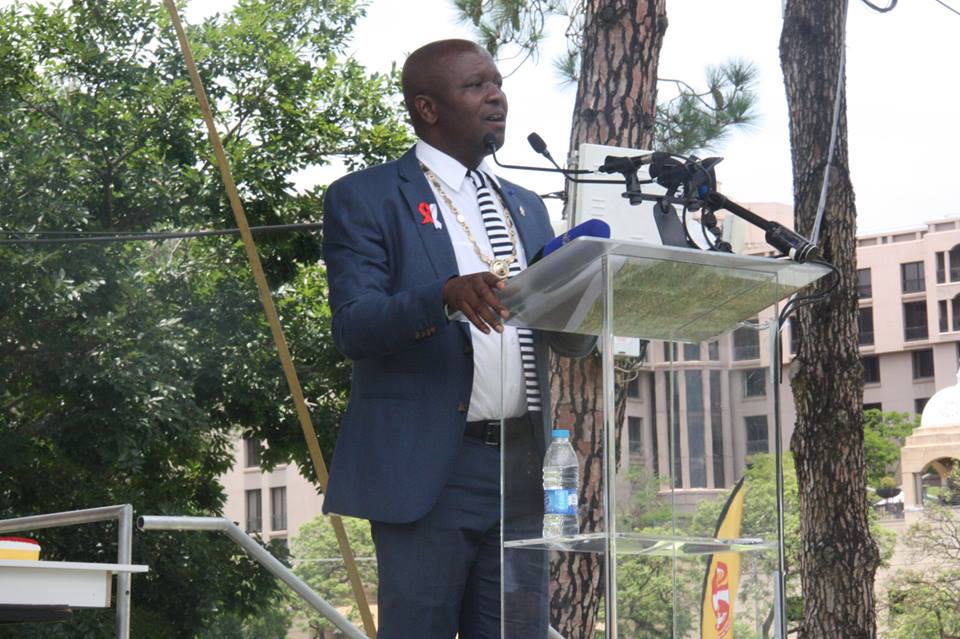
ADDRESS BY DENOSA PRESIDENT, DENOSA 20th ANNIVERSARY

5 December 2016
Deputy President of the Republic of South Africa, Honorable Cyril Ramaphosa
President of COSATU, Cde Sidumo Dlamini
Deputy Minister of Health, Honorable Dr Joe Phaahla
Founding president of DENOSA, Prof Ndzimande
Former General Secretary, Ms Thembeka Gwagwa
Former Presidents, Mr Ephraim Mafalo and Ms Dorothy Matebeni
Chairperson of SANNAM, Cde Bheki Mamba and His team from Swaziland
Former President and Secretary General of Botswana Nurses Union (BONU)
Acting Registrar and CEO of the South African Nursing Council (SANC), Ms S. Mchunu
Chief Nursing and Midwifery officer of South Africa, Dr N. Makhanya
CEO of Fundisa Leadership of all societies within the Nursing Fraternity,
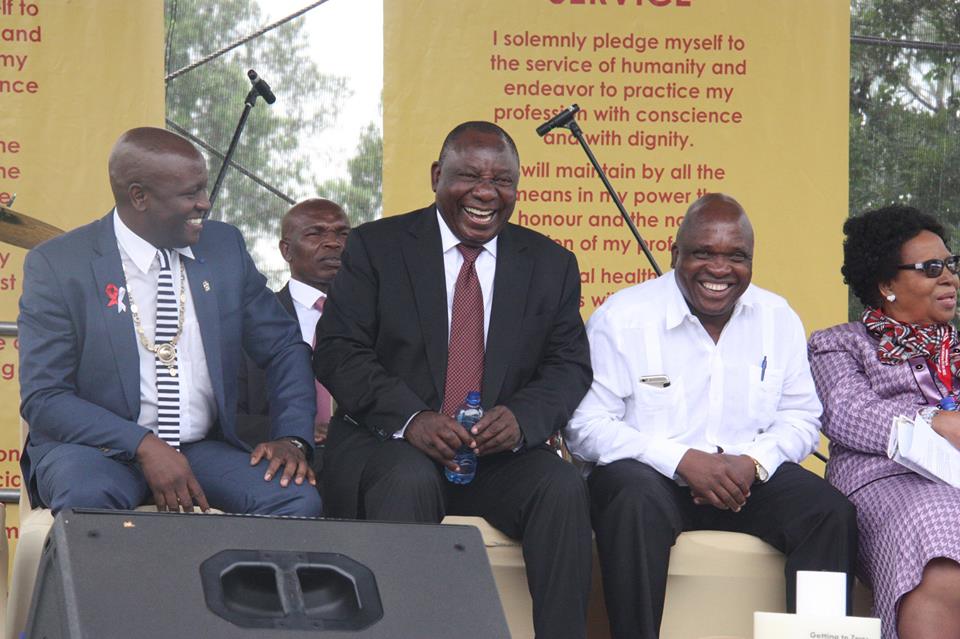
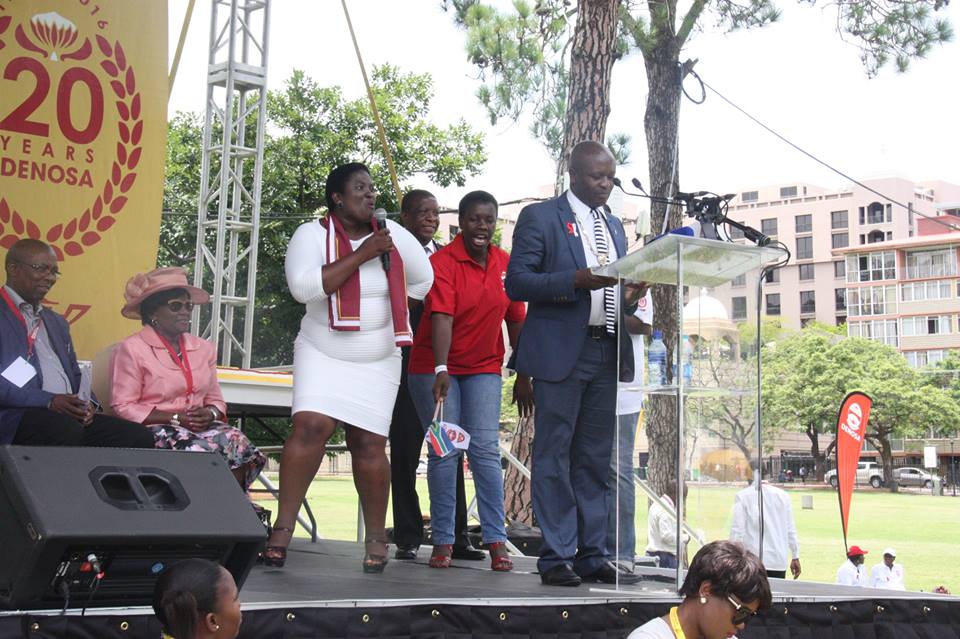
The National Executive Committee of DENOSA, Organisors of this wonderful event, Our partners Visitors Nurses of South Africa and the world, Please allow me to greet you and say: Dumelang, Sanibonani, Ndimatsheloni, Molweni, Gooie more, Good morning, Thobela, Avuxeni, Lotshani The 5th of December 2016 marks two decades of DENOSA’s efforts to uniting nurses in our country. Under the theme: Celebrating 20 Years of Unifying Nurses. We are excited as the family of DENOSA that we have reached the 20-year milestone of unifying nurses in pursuit of service excellence.
We remain resolute to our brand promise. United we care and share. It has not been an easy journey by any imagination. However, we take great pride in having reached where we are while there is still a lot that needs to be done. This celebration is held at the Union Building, the birth place of DENOSA, where it was launched by Tata Nelson Mandela on the 5th of December 1996. This day is very significant to us as South Africans; it is also a day in which Dr Nelson Mandela died in 2013. The Nelson Mandela Children’s Hospital was opened last week Friday. The hospital is a legacy that Nelson Mandela wanted to leave for children of Africa. We expect that nurses will ensure the smooth running of the hospital and we invite those willing to assist sustaining Nelson Mandela’s dream to do so in kind. The history of nursing in South Africa can be narrated as a bitter one. Prior to the formation of DENOSA, nurses had no freedom of choice to association, as nurses in homelands had to pay subscription to both those homelands organizations and to SANA at the same time. SANA was compulsory to belong to. Salary gaps between nurses on the basis of race was what unsettled nurses into pushing towards the formation of a Democratic Organisation for nurses of South Africa. That’s when negotiations ensued with SANA and homelands nurses associations. The negotiation process itself was never easy. But eventually, negotiations yielded positive results, paving the way for the formation of an organisation that will represent nurses as both professionals and workers. That is what informed the character of DENOSA. At our official launch right here at the Union Buildings on 5 December 1996, the then State President, Nelson Mandela, said the following: “Though you have still to complete the unification process, this launch demonstrates the commitment of all of you to make a success of it. Co-operation with other stakeholders should be your watchword: including with those who are not part of your organisation. We have great and realistic expectations of Denosa, and so does the rest of the country. You dare not let us down” That was 20 years ago. Organisationally, this message still resonates well with the nursing fraternity today. It must be said that, while the efforts of unifying nurses began as far back as 1996 when DENOSA was formed, a lot still needs to be done to realise the unity of nurses. Part of observing the 20 year journey is to continue with the clarion call for nurses to unite for the sake of the progress of the profession.
Disintegration has proven to have done a great disservice to the noble profession. The longer we give allowance to disunity, the more the damage and disintegration of nurses will tear the profession further apart. Madiba made a telling point that nursing, more than any other profession, was deeply divided by apartheid. Despite this major challenge, the nursing profession has been at the forefront in the major turnaround in the fight against HIV and AIDS in the country, since the Nurse-Initiated Management of Antiretroviral Theraphy (NIMART). To date, around 3 500 million South Africans are on the ART programme, making it the world's largest ART programme. In order to test 90% of people with HIV, and ensure that 90% of them are enrolled into the Anti-retroviral Treatment (ART) programme, and that 90% of those have their viral load suppressed by year 2020. Health system’s resilience needs to be strengthened. That is the only way we can realize the Sustainable Development Goal number three (SDG 3) “Ensure healthy lives and promote well-being for all at all ages” This ART programme has had positive impact in the form of an increase in life expectancy of South Africans, which will surely have positive economic spin-offs for both the country and individual's socio-economic status. Moreover, nurses are now at the forefront of implementing the WHO's new Universal Test and Treat (UTT) as of September, making South Africa to become one of the first WHO member states to implement UTT well ahead of the set commencement date in December. This will further boost general health and longevity of South Africans. These achievements come off a profession that is yearning for a proper recognition and support in South Africa, given its history of being divided. In 2006, when DENOSA celebrated its decade of existence, the then President Mr. Thabo Mbeki promised nurses the establishment of a Chief Nursing Officer position within government as well as improve the socio-economic conditions at work. Both these were delivered to nurses, starting with Occupation-Specific Dispensation (OSD) in 2007, as well as the appointment of a Chief Nursing Officer in 2014' However, DENOSA and nurses have experienced difficulties with the implementation of these two. While CNO was appointed at National Department, this work was half done. Provinces have not established the CNO positions. Nursing Directorates have not been established in most provinces. This leaves nursing in chaos. The challenges which are known to nursing, remain unaddressed as a result. The lack of establishing directorates in provinces leaves nursing in a 'micro-managed' situation, which prevents it from unleashing its full potential in the provision of quality health service to citizens. When OSD was signed, it was agreed that it will be reviewed after five years from 2007. The review has not happened.
Nurses, who are the majority workforce in health, are left demoralised. DENOSA together with the International Council of Nurses (ICN) would like to see the Universal Health Coverage realized. This is why we fully support the NHI, and would like to see the role of nurses fully clarified in this regard, as well as the benefits of NHI thoroughly explained to communities. NHI can only work if it involves communities who would in return help drive the paradigm shift from curative to health promotion and disease prevention. Severe shortage of nurses, coupled with dilapidated infrastructure poses a threat to the very same priority projects that government has put in place. In its 20 years of existence, the organisation has had many successes that are worth celebrating. These include: Spear-heading the formation of Southern African Network of Nurses and Midwives (SANNAM) as a regional body for nurses in the SADC region Introduction of uniform allowance for nurses in 2005 at the bargaining council, we had to go on a pijama strike to archive this Campaigning for the establishment of a Chief Nursing Officer position within the Department of Health since 2006, and the subsequent appointment of the officer in 2014 Establishment of DENOSA Professional Institute (DPI), to look at professional needs of nurses in the workplace Concluding an agreement on Occupation-Specific Dispensation for nurses at the bargaining chamber in 2007, for proper adjustment of nurses’ salaries according to experience and specialty (PHSDSBC Resolution 3 of 2007) Concluding an agreement on Danger Allowance for nurses working with users of psychiatric services Concluding an agreement for professional nurses working in rural areas to receive rural allowance Assisting nurses in the DRC and Mozambique to establish a nursing regulatory body in their country Assisting the Zambian Nurses Organisation to become a nurses union Ongoing case representation for members Nurses are still grappling with many challenges in the profession, which poses a threat in the delivery of quality healthcare to patients. Some of these challenges that we continue to deal with head-on, include: Severe shortage of nurses, which result in burnout in the public sector facilities, with the consequence of automatically leading to compromised quality care Non-absorption of community service nurses and post-community service nurses in provinces. Community service nurses that are not absorbed Urgent need to review the Occupation-Specific Dispensation (OSD) and include nurses that were previously excluded in the current OSD regime Establishment of Nursing Directorates in all provinces, proper staffing of those and appointment of Chief Nursing Officers in provinces to spear-head nurse-related issues within health Lack of safety of health workers in most facilities Inclusion of lower category nurses in benefiting from Rural Allowance Payment of Danger Allowance to nurses in units such as Casualty, TB, and nurses in Community Health Centres and clinics Clear career-pathing for lower category nurses in the time of new nursing curriculum Continuous Professional Development opportunities for all nurses in the workplace Proper reconfiguration of Performance Management Development System (PMDS) countrywide to take into account staff shortages in health facilities and negative effect of this on performance of nurses Therefore, with these milestones that the nursing profession has managed to achieve over the years, the outstanding matters which continue to hinder the effectiveness of the nursing profession in the lives and health of South African, will be resolved quicker when we find the common voice as a nursing profession first and when government collaboration is characterised by willingness to consider inputs from the nurses. God Bless Nurses of South Africa, God Bless DENOSA, God Bless Africa. I thank you