View all
RETIRED BUT NOT TIRED… Time with patients is of essence and forms part of quality care provision, say Mojapelos
By Sibongiseni Delihlazo
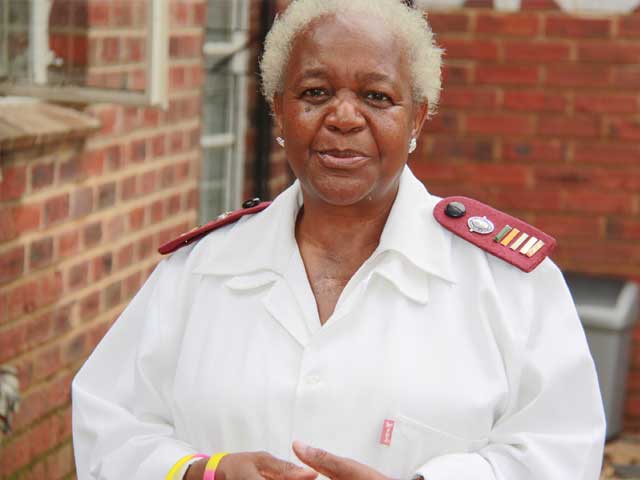
In the country where there is gross shortage of nurses, the time that nurses and doctors need to spend with patient in a consultation room remains a luxurious wish for many health professionals, says Didi Mojapelo, a retired veteran nurse who runs Refilwe Bophelo Clinic near Joe Slovo informal settlement outside Lanseria in Johannesburg.
“It’s the manner in which we spend so little a time with our patients in all facilities that sees the same patients returning to the same facilities for the same problem,” she complaints.
“As nurses, we have become detached from understanding our patients and, due to lack of proper time to talk to them about their illnesses when at the facility, we miss out a lot from understanding what could have caused a headache, for instance.”
Her clinic is situated inside Refilwe Community Project where she was given a house by the project to turn it into a clinic, and it looks after community members in the farm areas of Joe Slovo, Makepisi, Costail, Chicken Pie and Louis’ Place informal settlements, which are distant from one another.
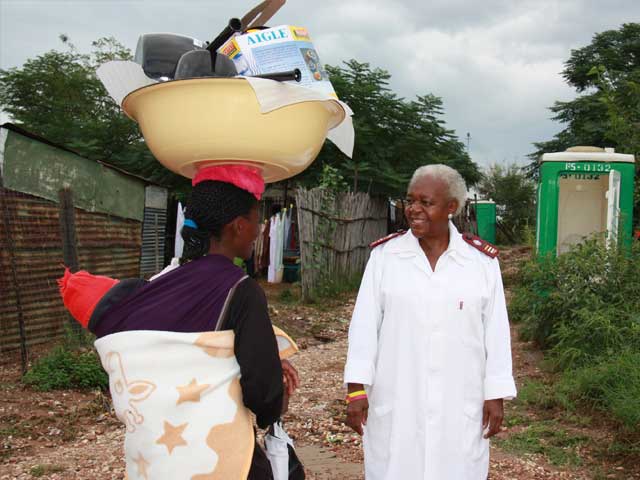
She runs her clinic together with her husband and retiree, Moalusi Mojapelo. “During our visits to homes of patients, my two caregivers and I travel on foot for almost an hour from one informal settlement to the next. My small car can’t go in these areas. Only if I had a bakkie, our life would be much easier, as we also receive about 25 2-litre containers of cooked and frozen soup made of vegetables every Thursdays which we distribute to our targeted families around here.”
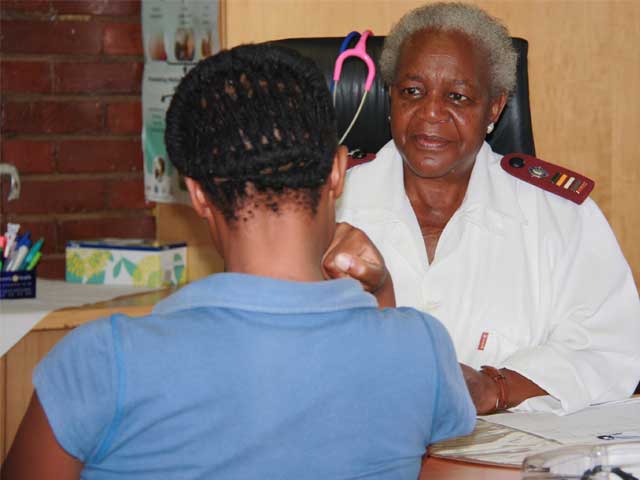
Moalusi says he has noticed that his wife spends no less than 20-25 minutes with each patient at consultation room. “She digs out every detail that could have potentially led to the state that the patient finds herself in. For instance, while a patient would complain of headache when coming here, she would give an ear to what condition the patient comes from and would later discover that the patient suffers from stress due to poor conditions,” explains Moalusi.
Sister Didi, who is known to children in the area as ‘doctor’ because of her white coat when visiting homes, says getting back to basics in strengthening primary healthcare will address the bigger challenge that causes shortages of nurses in clinics. This is what she is doing, she attests. “By visiting patients in their homes, for instance, you get to see the extreme conditions that most people live under. Based on that, you feel the need to act, which is not the case when we are based in facilities: all we see are irritating people all the same.”
She took early retirement in 2004, only to see the need to work in the home-based field of HIV management programme, a job she managed for five years, and then moved to Wits Health and Reproductive HIV unit. When asked why she used her time of resting to keep on working, she said: “Because of my passion for nursing, when I retired, I prayed to God to locate me to where there is a need. And he did. People are really suffering here, where the closest clinic is some 20 kilometres away near the already overpopulated Diepsloot.”
While her four-room facility cares for about 15 patients a day, she is not funded or sponsored. “I only get immunization medication from the department of health so we immunise the children in the area for measles, polio and so on.”
Asked how she keeps the clinic going as she does not have sponsors, Mrs Mojapelo says their spirituality is their source of strength, “Whatever the donation we get, we distribute it to communities. Because God gives other people food, people donate those to our clinic.”
The fear of the Mojapelos is that, due to gross shortage of nurses in facilities which takes a toll on few nurses at work, one day patients will arrive at hospital only to find that all nurses are sick because of strength. “What would patients do in that case?”